
Hikaru, 光, and ヒカル
On translation, and sound versus meaning

In December, I started reading the manga The Summer Hikaru Died. I generally prefer reading manga in Japanese when possible, but since I picked the first volume up by chance in a US bookstore, I read most of The Summer Hikaru Died in English before switching to the Japanese when I ran out of translated chapters.
This post is about something that is lost in translation, and it has to do with the way Japanese is written.
The writing system of Japanese has three alphabets: kanji, hiragana, and katakana. Kanji are the thousands of Chinese pictographic characters adopted into the Japanese language: 雪 means snow, 猫 means cat, 兄 means big brother, and so on. Every kanji has a meaning. Hiragana and katakana, on the other hand, are much more like the Latin alphabet we use in English: hiragana and katakana symbols represent sounds only, with no meaning inherently attached. (The hiragana and katakana alphabets are basically the same, but hiragana is used for native Japanese words while katakana is used for foreign loanwords.)
The first chapter of the manga opens like this: two teenage boys, Hikaru and Yoshiki, are sitting together outside their small-town convenience store (which is tragically out of ice cream) on a hot summer day, complaining about how they have to run a marathon at school in this heat. Hikaru says, jokingly, that it’s ‘torture.’
The word for ‘torture’ is 拷問/gōmon. But when Hikaru says it, he mispronounces it, and so it’s written in katakana: ゴーモン/gōmon. Technically, it’s the right word, but the intonation is wrong, all flattened out, as Yoshiki points out.
Just after this, Yoshiki asks Hikaru who he really is. Because he’s not Hikaru; Hikaru died six months ago, when he went missing up in the mountains for a week, and then came back a little different. The thing sitting next to Yoshiki looks and sounds and acts like Hikaru, but he’s not.
Nobody else has noticed.
The thing that looks like Hikaru and is not owns up immediately, and begs Yoshiki not to tell anyone. Yoshiki, who would rather have his best friend with him in this form than not at all, agrees.
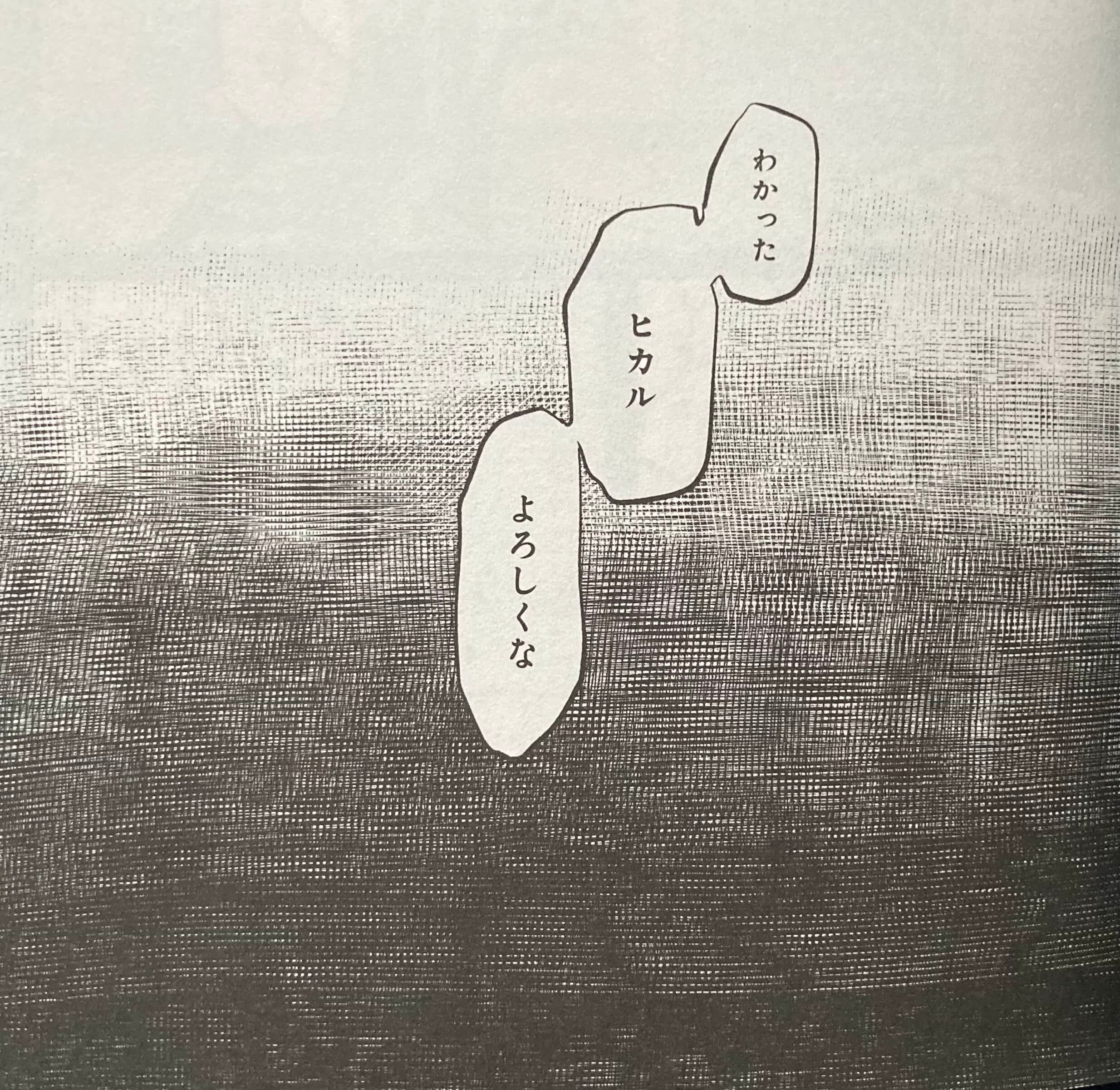
Hikaru’s name is typically written with a kanji: 光, pronounced hikaru and meaning ‘light.’ From this point onward, Yoshiki addresses the imposter by the same name, but written in katakana: ヒカル, hi-ka-ru. The right sounds, but none of the meaning behind them.
This sets up 光 (the original Hikaru Indou, who is dead) and ヒカル (the creature who has taken over his life) as, effectively, two distinct characters. In the English translation, this distinction is made by offsetting the latter’s name in quotes: Hikaru and ‘Hikaru.’ It’s functional, but I think some of the symbolism is lost.
The imposter Hikaru has all of the original’s memories, but he has no experiences of his own; as he tells Yoshiki, this is his first time going to school, or having friends, or eating ice cream. There are a lot of things that he intellectually remembers or knows about, but does not personally understand, because his perspective is fundamentally inhuman. He has the right sounds, but that’s it.
A few dozen chapters later, Hikaru is confronted by another of his and Yoshiki’s friends, a girl named Asako who has a degree of sensitivity to the supernatural. The imposter panics, and nearly kills her before Yoshiki arrives and interrupts. In the aftermath, Yoshiki, horrified, tells him that people’s lives are important.
When Yoshiki says ‘life,’ it’s written with the kanji, 命 (inochi). When Hikaru echoes the word back at him, it’s in katakana: イノチ, i-no-chi. He can say the sounds fine, but the meaning is lost. He admits outright that he doesn’t understand what the difference between life and death is, for humans, or why it matters. It’s not something that ever had any significance to him in his prior existence as an amorphous eldritch consciousness.
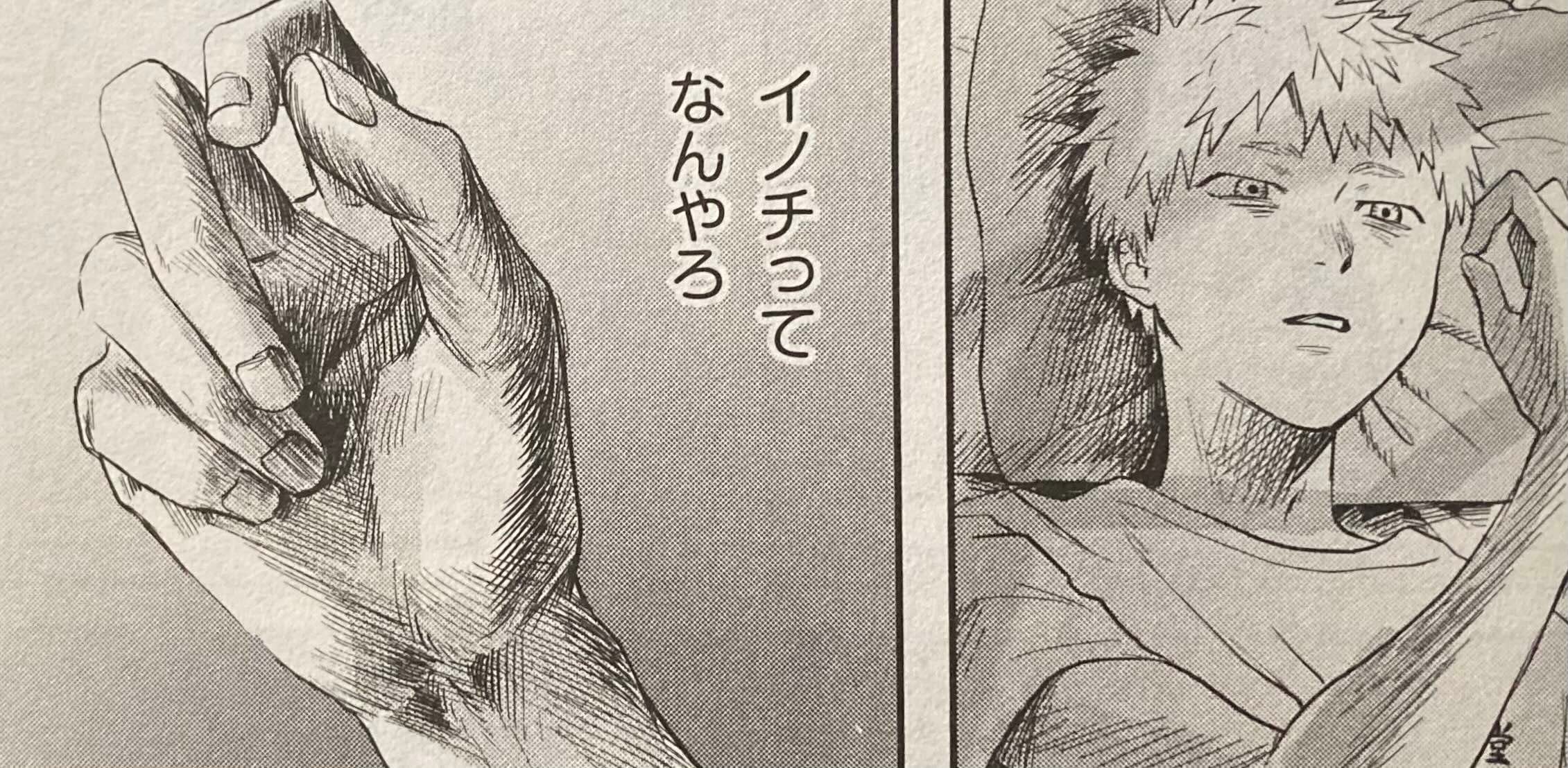
Yoshiki, as the only one in his personal life who knows Hikaru isn’t the original, is also the only one who calls him ヒカル. He’s the only one who knows that despite being Hikaru Indou by all outwards appearances, the similarity is fundamentally only a surface one; beneath the surface, the Hikaru we follow through the story processes things in a very alien way, and lacks basically all of the things we would consider to make someone ‘human’ or ‘alive.’
Their families and friends and neighbors, who have no idea anything is amiss, still call him 光. The kanji— the name of the real boy— is the version used in the title of the series, as well.
The Summer Hikaru Died is set to be adapted to anime this year, and it occurred to me that, as in translation, this aspect of the writing will likely be lost in spoken dialogue, even in Japanese. When spoken aloud, both names sound just the same.
Sources:
The Summer Hikaru Died by Ren Mokumoku, published in Japanese by Kadokawa Comics A
Oh this is so cool